
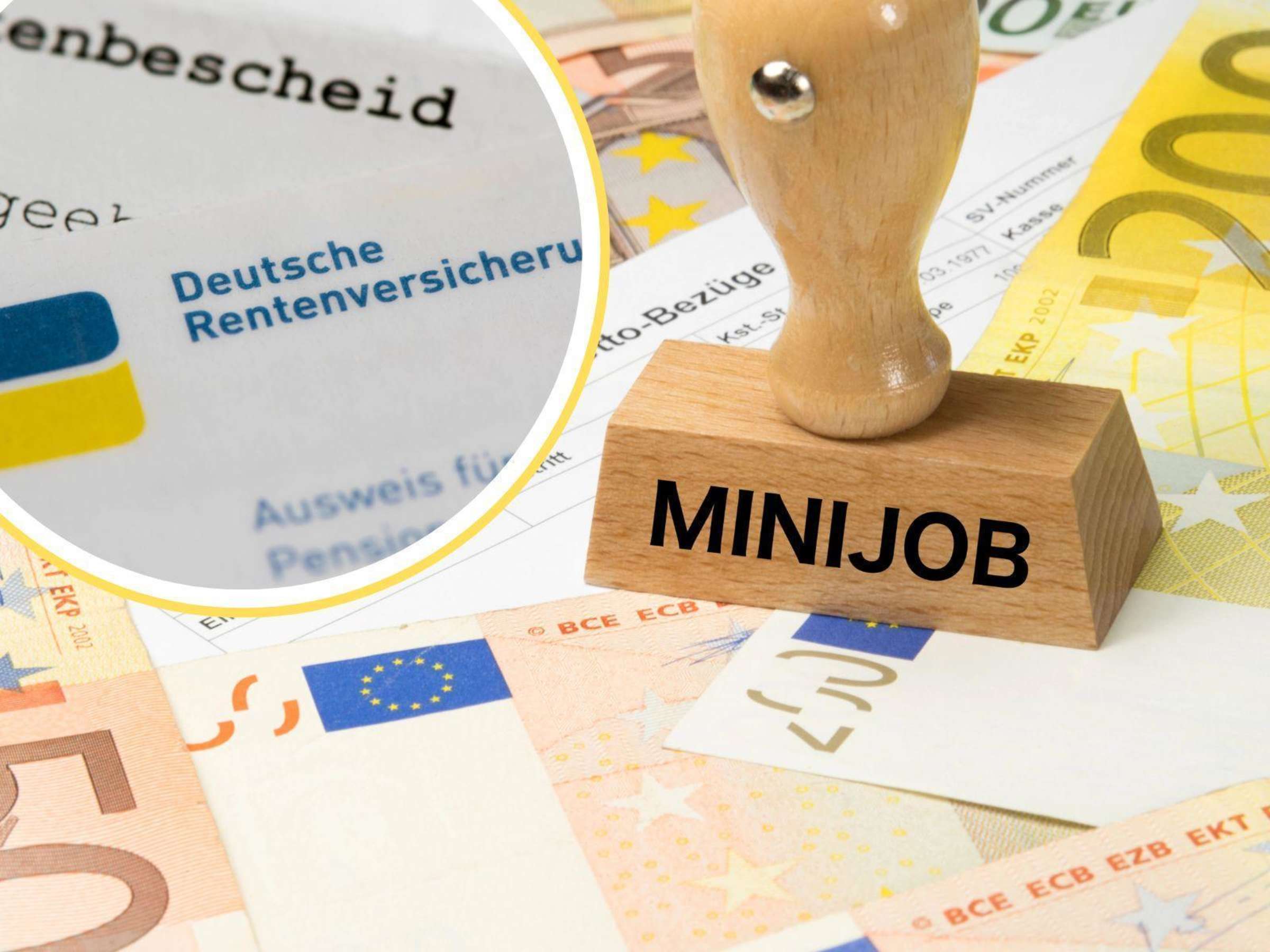
Germany has a specific regime for low paid employment that has no direct equivalent in most other European systems. It matters to students, to second jobs, to people returning to work and to anyone employing domestic help.
The Minijob
A Minijob is employment with earnings up to a monthly limit, which is now indexed to the statutory minimum wage and therefore rises with it. Below that limit the employee pays no income tax and no social contributions, with one exception.
- The employer pays a flat charge covering pension, health and a flat rate tax, at a combined rate substantially higher than the ordinary employer share.
- The employee pays nothing except a small compulsory pension contribution, from which it is possible to opt out.
- Opting out of the pension contribution saves a few euros a month and forfeits the month's contribution to the state pension record. For a short period it makes little difference. Over years it does.
- The limit is monthly but assessed annually, so a fluctuating income is measured against twelve times the monthly figure with allowance for occasional overruns.
The net effect is that gross pay equals net pay. For a student, a pensioner or someone taking a second job, this is a genuinely efficient arrangement and it is why Minijobs are so widespread.
The Midijob transition zone
Immediately above the Minijob limit, full employee contributions of roughly twenty percent would apply if nothing else intervened. That would produce a cliff where earning one euro more left you substantially worse off.
The Midijob zone, formally the Übergangsbereich, prevents that. Between the Minijob limit and an upper boundary of 2,000 euros a month, employee contributions are calculated on a reduced notional basis that rises gradually to the full amount. The employer pays correspondingly more at the bottom of the range.
Because the basic tax free allowance is 12,096 euros a year, someone earning 2,000 euros a month is around the point where income tax also begins to be material. The two effects arrive close together.
Where it interacts with other rules
- Second jobs. One Minijob alongside a main employment is exempt from employee contributions. A second Minijob is not, and is aggregated with the first. This is the most common error in the area.
- Tax class VI. A Minijob taxed at the employer's flat rate does not fall into tax class VI. A second regular job does, with the heavy withholding described in German tax classes.
- Students. Working students have their own rules under the Werkstudentenprivileg, which exempts them from most contributions while studying, subject to an hours limit during term.
- Pensioners. A Minijob alongside a pension is common and the pension contribution opt-out is usually the sensible choice at that stage.
The policy criticism
The Minijob has been criticised for a long time on the grounds that it discourages progression: an employee near the limit faces a strong incentive not to exceed it, and the jobs themselves rarely lead anywhere. It has also been associated with low pension entitlement, particularly among women working part-time over long periods.
Indexing the limit to the minimum wage and building the Midijob zone addressed the sharpest edges. The underlying incentive remains, and anyone deciding whether to take extra hours near the boundary should do the arithmetic rather than assume the extra pay is worth having.
The general shape of this problem across countries is in part-time pay and the pro rata trap.